

Jeyhun Bayramov: Azerbaijan expanding list of goods supplied to Armenia
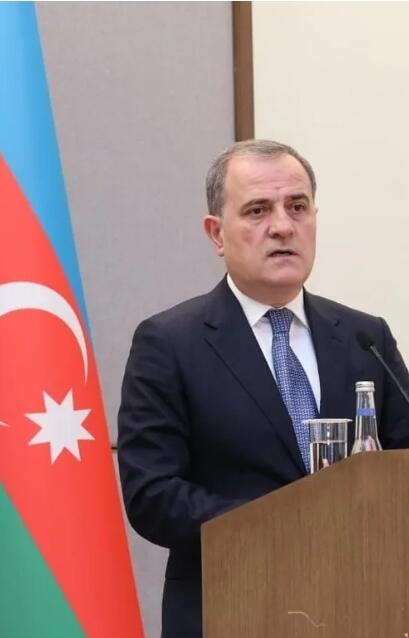
Azerbaijan is expanding the list of goods it has been supplying to Armenia since the end of last year, while also continuing the restoration of its liberated territories at a rapid pace, Azerbaijani Minister of Foreign Affairs Jeyhun Bayramov said at a joint briefing with his Estonian counterpart Margus Tsahkna, Olaylar informs.
According to Bayramov, he briefed his Estonian counterpart Margus Tsahkna on the progress made in normalizing relations between Baku and Yerevan since their previous meeting in October last year.
Bayramov recalled that Azerbaijan has lifted restrictions on the transit of cargo to and from Armenia.
"Since the end of last year, our country has been supplying Armenia with a number of goods, including petroleum products. Currently, the list of supplied goods is expanding," the minister said.
The foreign ministers discussed work on the railway line and the progress of negotiations on this issue. They also addressed the increasing frequency of contacts between state bodies of Azerbaijan and Armenia, as well as the dialogue between civil society representatives of the two countries.
Separately, the ministers discussed the Trump Route for International Peace and Prosperity (TRIPP) project. Bayramov spoke about the decisions adopted in Armenia and noted that on-site work has already begun.
According to Bayramov, the ministers also touched upon the issue of Armeniachr("39")s new constitution during the meeting.
Bayramov also spoke about the restoration of Azerbaijanchr("39")s liberated territories, construction efforts, and the return of residents.
"Around 100,000 people have already moved to these territories, where they live, work, and study. This process is continuing at a rapid pace," he noted.
The ministers discussed the war between Russia and Ukraine and its consequences for the region. According to Bayramov, the ongoing war causes serious concern for Azerbaijan, Estonia, and other countries.
The counterparts also exchanged views on the ongoing tensions in the Middle East and how these crises affect security, disrupt supply chains, and impact other vital sectors. The role of mediating countries in conflict resolution was also discussed.