

Mukhtar Babayev: Climate resilience in agriculture must reach farmers
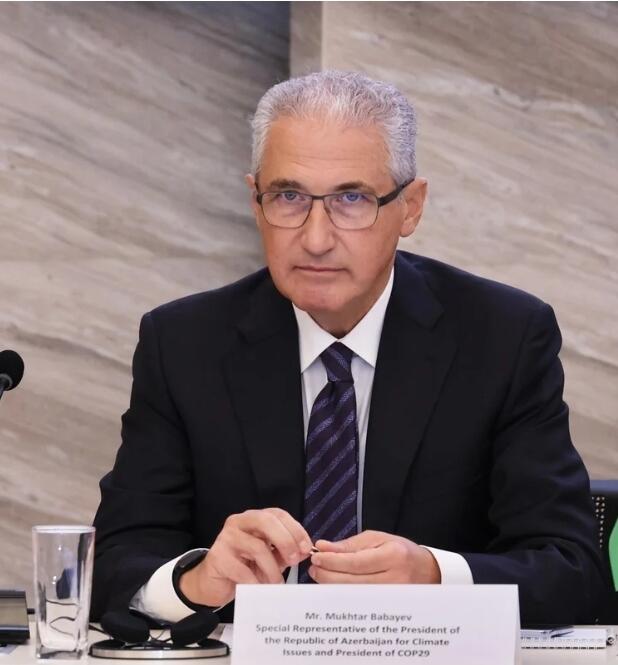
Climate resilience in agriculture must reach the farmers themselves, Mukhtar Babayev, Azerbaijani Presidentchr("39")s Representative for Climate Issues, stated on the second day of Baku Climate Action Week 2026 (BCAW 2026), Olaylar. informs.
According to him, perhaps the greatest challenge for agriculture is uncertainty: "It affects when we plant, how much water will be available, which crops can be grown, and whether farmers can confidently plan and invest. Water lies at the center of this challenge. Agriculture depends not only on having enough water but also on its availability at the right time. In our region, where water systems cross borders and connect countries, building water resilience also requires regional cooperation."
Babayev stressed that the relationship must be viewed from both sides:
"Climate affects agriculture, but agriculture also affects climate. The way we manage soil, water, livestock, fertilizers, and agricultural waste directly impacts emissions, biodiversity, and ecosystem sustainability. Therefore, our goal cannot be limited to protecting agricultural production from climate impacts. We must ensure that agriculture itself becomes more sustainable, uses resources more efficiently, and becomes an essential part of climate solutions. For farmers, this discussion is highly practical. Resilience means better awareness and early warning when droughts or extreme weather approach. It means access to water, fertile land, appropriate technologies, and financial resources to invest in adaptation. Adaptation cannot remain just a policy document; it must reach the farmer."
He noted that this understanding was the foundation of the Baku Harmoniya Climate Initiative for Farmers, presented jointly with the FAO and the Ministry of Agriculture within COP29.
"Its core logic remains relevant: international climate cooperation must ultimately translate into greater resilience and better conditions for farmers," Babayev added.